What is the Geographical Location of Turkey?

Turkey is a country located on both the Asian and European continents. Geographically, its strategic location has made it an important transit point throughout history. To the east, Turkey shares borders with Georgia, Armenia, and Iran; to the west with Greece and Bulgaria; and to the south with Syria and Iraq. These neighboring countries play a significant role in Turkey's international relations and trade. Its geographical position is one of the factors that enriches Turkey both culturally and economically.
Turkey's geographical structure includes various elements such as mountains, plains, and waterways. In particular, high mountain ranges like the Taurus Mountains and North Anatolian Mountains directly affect the country's climate and agricultural areas. Additionally, Turkey is rich in water resources with many rivers and lakes. These elements contribute to the formation of natural beauties and the increase of ecological diversity. Thanks to this geographical structure, the country has also become an attractive destination for tourism.
- Turkey's land area is approximately 783,356 km².
- The highest point in the country is Mount Ararat.
- It is surrounded by the Black Sea to the north, the Aegean Sea to the west, and the Mediterranean Sea to the south.
- The straits increase Turkey's strategic importance.
Turkey's geographical location also leads to a variety of climates. Different regions of the country exhibit Mediterranean, Continental, and Oceanic climate types. This diversity offers various opportunities in sectors such as agriculture, livestock, and tourism. For example, in regions dominated by the Mediterranean climate, olive and citrus cultivation is common. In the Central Anatolia Region, where the continental climate is prevalent, grain production is prominent. This situation contributes to the diversification of Turkey's agricultural production and its economic development.
Which Countries Share Borders with Turkey?
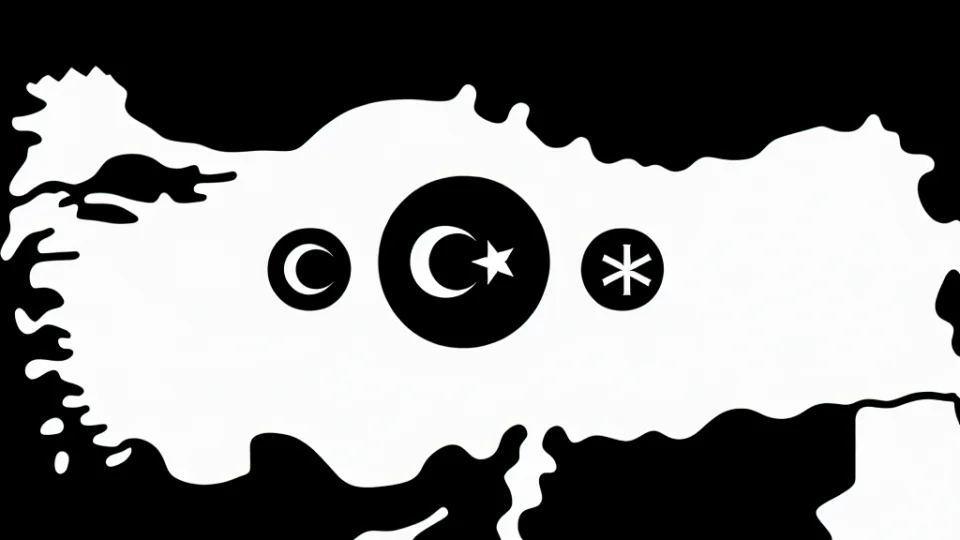
Turkey shares borders with many countries due to its geographical location. With a total of eight neighboring countries, Turkey has deep historical and cultural ties with these nations. Among its border neighbors are Greece and Bulgaria to the west, Georgia and Armenia to the north, Azerbaijan and Iran to the east, and Iraq and Syria to the south. The border with these countries enhances Turkey's strategic importance and shapes its regional relations.
Greece and Bulgaria, located to the west, facilitate Turkey's connection to Europe, and trade and tourism relations with these countries have also significantly developed. Particularly, maritime trade conducted over the Aegean Sea contributes to strengthening the economic ties between the two countries. Turkey has areas defined by natural borders, such as the Meric River, along its border with Greece. These borders can sometimes lead to political disputes.
Georgia to the north is Turkey's gateway to the Black Sea. Relations with this country are of great importance, especially in terms of energy and transportation projects. For example, the Baku-Tbilisi-Ceyhan oil pipeline is a significant project that strengthens cooperation between the two countries. Additionally, cultural interactions between Georgia and Turkey contribute to the growing friendship between the two societies.
To the east, Iran is one of Turkey's largest neighbors. The two countries are interdependent, especially regarding energy resources and trade. The border between Iran and Turkey runs around Lake Van, forming an important transportation line between the two nations. Furthermore, the neighboring relations with Iraq and Syria are critical for Turkey's security policies. The border with these countries is of great importance for ensuring Turkey's internal security.
Where is Turkey Located? What is its Distribution by Continents?

Turkey is a country that is geographically located in both Asia and Europe. While a large part of the country is situated in Asia, on the Anatolian Peninsula, a small region known as Thrace is located on the European continent. This situation is an important factor that enhances Turkey's strategic position and cultural richness. Turkey's location on these two continents has historically allowed it to host many civilizations.
Turkey, located on the Asian continent, is situated in the Western Asia region. One of the most significant features of this continent is its rich natural resources and diverse climate structures. Turkey is bordered by Caucasia and the Middle East to the west of Asia. This has made Turkey an important center both culturally and commercially. Additionally, it has historical and current relationships with many countries on the Asian continent.
Turkey in the European continent is defined as South Eastern Europe. The Thrace region provides Turkey's connection to Europe. Historically, this area has been the center of many wars and political activities. Furthermore, Turkey's relations with the European Union are also influenced by its position in this region. As a gateway to Europe, Turkey is therefore an important transit point for trade and tourism.
Turkey's geographical location enables it to integrate into the cultural and commercial dynamics of both Asia and Europe. This has helped Turkey become a country recognized worldwide. With its natural beauties, historical structures, and diverse cultural influences, Turkey attracts the interest of both local and international tourists. Moreover, Turkey's geographical position plays a significant role in international relations.
What Are the Geographical Features and Climate of Turkey?

Turkey is a country that draws attention with its geographical diversity. Due to its land being located in both Asia and Europe, it hosts various climate and natural conditions. In particular, the Aegean Sea is located to the west, the Mediterranean to the south, and the Black Sea to the north. The influence of these seas significantly shapes Turkey's climate structure. Different regions of the country have quite distinct climate characteristics, which enhances Turkey's natural wealth.
Turkey's climate structure is generally divided into four main climate types: Mediterranean climate, continental climate, oceanic climate, and mountain climate. The Mediterranean climate is particularly effective in the southern and western coastal regions, characterized by hot and dry summers and mild winters. The continental climate, dominant in the Central Anatolia Region, features hot and dry summers and cold, snowy winters. These different climate types directly affect economic activities such as agriculture and livestock.
The mountains, plains, and rivers that are part of Turkey's geographical features also have a significant impact on the climate. Especially, the Eastern Anatolia Region is covered with high mountains, which makes the climate in the area cooler. Additionally, the rivers found in many regions of Turkey are of great importance for agricultural irrigation and drinking water sources. These rivers are also elements that enhance Turkey's natural beauty.
Finally, Turkey has a sensitive structure in the face of climate change. Recent climate events have had negative effects, particularly on agriculture and water resources. Phenomena such as desertification, drought, and excessive rainfall threaten Turkey's climate balance. Therefore, combating climate change and developing sustainable environmental policies are of great importance for Turkey.
What is Turkey's Strategic Importance?

Turkey has hosted many civilizations throughout its history and is therefore in a geopolitical bridge position. Its role as a transit point between Asia and Europe is one of the most significant factors that enhance Turkey's strategic importance. This geographical location not only makes Turkey a crossroads for trade routes but also establishes it as a significant actor in military and political terms. Particularly, being a transit point for energy pipelines makes Turkey a critical country in terms of energy security.
Turkey's strategic importance is also reflected in its role in international relations. As a NATO member, Turkey has taken on the role of a balancing element between the West and the East. This situation makes Turkey an important ally both within NATO and in other international organizations. Additionally, Turkey's military strength and regional influence are other factors that reinforce the country's strategic importance.
- Bridge position between Asia and Europe
- Transit point for energy pipelines
- Role in international relations as a NATO ally
- Regional influence with military strength
Finally, Turkey's strategic importance is also related to its historical and cultural riches. As a meeting point of different cultures, Turkey is an attractive location in terms of tourism. This situation contributes to both Turkey's economic development and its international image. The wealth that Turkey offers helps the country become more visible on the international stage and enhances its strategic importance.
Which Regions of Turkey Stand Out as Tourist Destinations?

Turkey, in addition to being a country rich in historical and cultural treasures, also stands out for its natural beauty. Therefore, various regions of Turkey hold great significance in terms of tourism. For example, Aegean Region has become a favorite among holidaymakers with its historical ruins and unique beaches. Popular holiday resorts such as Bodrum, Çeşme, and Kuşadası attract a large influx of domestic and foreign tourists, especially during the summer months. The ancient cities located in the Aegean Region are also important visiting points for history enthusiasts.
- Aegean Region: Bodrum, Çeşme, Kuşadası
- Mediterranean Region: Antalya, Alanya, Kaş
- Marmara Region: Istanbul, Bursa, Tekirdağ
- Black Sea Region: Ayder Plateau, Trabzon, Rize
Another important region is the Mediterranean Region. Antalya is one of the most visited cities in Turkey. With its stunning beaches, luxury resorts, and historical ruins, it welcomes millions of visitors each year. Alanya is an attractive destination for young tourists with its beach activities and nightlife. Additionally, quieter places like Kaş offer an ideal choice for those looking to vacation in harmony with nature.
The Marmara Region is also an important area for tourism in Turkey. Istanbul, with its historical and cultural richness, is one of the most visited cities not only in Turkey but also in the world. Places like Hagia Sophia, Topkapi Palace, and the Grand Bazaar draw the interest of tourists. Furthermore, cities like Bursa and Tekirdağ stand out with their historical structures and natural beauty. The Marmara Region offers a rich tourist experience with both historical and modern architecture.
Lastly, the Black Sea Region is a unique area for nature lovers. Known for its green nature, mountains, and plateaus, this region is particularly famous for Ayder Plateau. In addition to its natural beauty, the traditional lifestyle and culinary culture of the region also attract tourists. Cities like Trabzon and Rize provide unforgettable moments for visitors with their historical structures and natural riches. The Black Sea Region is an important destination for nature and cultural tourism.
What Are the Cultural and Economic Relations with Neighboring Countries?

Turkey is a country that has many cultural and economic relations due to its geographical location. Its connections with neighboring countries have allowed it to be a significant intersection point for important trade routes throughout history. In particular, Turkey's role as a bridge between Europe and Asia has contributed to the diversification of these relations. For instance, the relations with Greece are important in terms of both trade and tourism, while the connections with Iran play a critical role in terms of energy resources.
Among Turkey's neighbors, countries like Georgia, Azerbaijan, and Iraq also have a significant amount of cultural exchange. Relations with these countries are shaped through historical ties and similar cultural elements. For example, the relations with Azerbaijan carry deep meaning due to linguistic and cultural unity, while trade connections with Iraq contribute to the economic development of both countries. This situation supports Turkey's steps towards becoming a regional power.
- Turkey-Greece: Tourism and trade relations
- Turkey-Iran: Energy resources and trade
- Turkey-Georgia: Cultural and economic collaborations
- Turkey-Azerbaijan: Historical and cultural ties
Turkish culture has also had an impact on communities in neighboring countries. Particularly, elements such as traditional music, culinary culture, and festivals have transcended borders and blended with other peoples. Turkey's economic relations with its neighbors are also part of these cultural interactions. For example, Turkey's agricultural products create an important market for neighboring countries. Additionally, Turkey's industrial products play a significant role in meeting the needs of many countries in the region.