Where Are the Boron Mining Locations in Turkey?
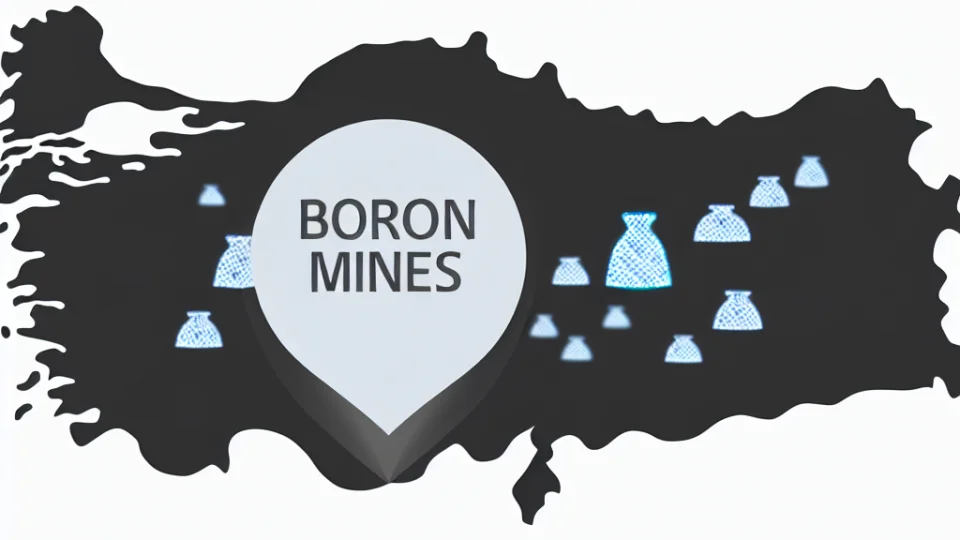
Turkey is a country that holds a significant portion of the world's boron reserves, and this mineral is primarily extracted in Eskişehir. The Kırka region, located on the border of Eskişehir and Kütahya, is one of the most important areas for boron mining. The enterprises in this region contribute significantly to both local and international markets by extracting high-quality boron ores. Additionally, various boron deposits can also be found in provinces such as Balıkesir and Manisa, alongside Eskişehir.
Boron plays a crucial role in Turkey's industry and agriculture sectors. Therefore, in addition to the locations where boron is mined, there are also facilities in different regions for processing and utilizing this mineral. For instance, the boron processing facilities in Eskişehir play a significant role in the processing and manufacturing of the mineral. These facilities produce various products related to the use of boron as a additive.
Another important location for boron mining in Turkey is the provinces of Çin and Afyon. These regions also have significant boron deposits. The boron mines located in Afyonkarahisar are particularly used in the ceramics and glass industries, serving as an important raw material source for these sectors. In this context, diversifying boron extraction in Turkey greatly contributes to the national economy.
In conclusion, the locations for boron mining in Turkey are not limited to Eskişehir, but also exist in various provinces such as Balıkesir, Manisa, Afyon, and Çin. The boron mines in these regions hold significant importance in both local and international markets. Turkey's boron mining potential is being further enhanced through investments in these areas, providing substantial contributions to the national economy alongside technological advancements in this field.
How Does the Boron Mining Process Work?
The boron mining process primarily begins with the identification of underground resources. At this stage, geological studies and research are conducted. As a result of these investigations, information about the richness and quality of boron deposits is obtained. This process is quite important because Turkey holds a significant portion of the world's boron reserves. This phase plays a critical role in determining the economic value of the mine and the extraction methods.
The extraction of boron ore is typically carried out using the open-pit mining method. In this method, the surface soil is excavated to reveal the ore. Open-pit mining allows for the extraction of boron ore in large quantities. During this process, various measures are taken to minimize environmental impacts. Thus, both economic and environmental sustainability are aimed to be achieved.
- Geological examination of underground resources
- Extraction using the open-pit mining method
- Minimization of environmental impacts
- Ensuring economic sustainability
The processing of the extracted boron ore varies depending on the quality of the ore. Initially, boron minerals are purified through various chemical processes. At this stage, boron minerals are transformed into products such as borates and boron oxides. The methods and technologies used during the processing stage affect the quality of the product, thereby increasing the value of boron products that will be offered to the market. Therefore, the processing stage is also an important step in boron ore extraction.
What Are the Applications of Boron Ore?
The applications of boron ore are quite extensive and play a significant role in various sectors of industry. Especially in the glass and ceramics industries, boron compounds are used to enhance the durability of products. In glass production, boron increases the thermal resistance of glass while also providing transparency and shine. In ceramics, boron enhances structural integrity, making the products more robust. In this respect, boron is an indispensable raw material in industrial production.
Another important application area of boron ore is the agriculture sector. In agriculture, boron is one of the micronutrients essential for the growth and development of plants. Especially boron fertilizers promote root development in plants and increase fruit yield. Boron also enhances the resistance of plants to diseases, significantly boosting agricultural productivity. Therefore, the use of boron in agricultural practices is of great importance for both farmers and food production.
In addition, boron ore has a significant place in the field of nuclear energy. Boron is used as a neutron absorber in nuclear reactors, ensuring their safe operation. Additionally, boron compounds are used in the storage of nuclear waste. The applications in this field demonstrate the benefits boron provides in the energy sector. Thus, boron ore has become a critical raw material in energy production.
Finally, the use of boron ore is also widespread in the cleaning and hygiene products sector. Boron compounds serve as effective disinfectants in cleaning products due to their non-toxic properties. Moreover, when used as a water softener, boron enhances the effectiveness of soaps and detergents. For this reason, the use of boron in the cleaning sector offers both an environmentally friendly and effective solution.
How Does Boron Contribute to the Turkish Economy?
Boron significantly contributes to the Turkish economy. Turkey holds approximately 73% of the world's boron reserves, making our country the leader in boron production. In addition to being a raw material used in various industries, boron also helps close Turkey's current account deficit. The high demand for boron contributes to our country's economic growth while also creating new opportunities in employment.
The economic contributions of boron are not limited to mining. With processing facilities and production processes, boron is transformed into value-added products. This situation allows for the development of local industry and technological advancement. Turkey has improved its capabilities in processing boron and using it in various products, thus becoming an important production center for both the domestic and foreign markets.
- Increase in employment opportunities
- Generation of foreign currency
- Strengthening of local industry
- Development of innovative products
The contributions of boron to the Turkish economy are also enhanced by the development of new technologies. Boron plays a significant role in energy-saving and environmentally friendly technologies. In this context, the development of boron-based products is critical in achieving Turkey's energy efficiency goals. Additionally, the use of boron in industry enhances Turkey's international competitiveness and ensures its economic sustainability.
Boron Ore Reserves Worldwide and Turkey
Boron ore reserves worldwide are quite limited and are therefore considered a strategic mineral. Turkey is in a leading position with approximately 72% of the world's boron reserves. This situation demonstrates how significant Turkey is in terms of boron ore. The reserves in other countries are generally not as rich as those in Turkey, which strengthens Turkey's position in the international market. Therefore, the extraction and processing of boron ore has become a critical economic activity for Turkey.
Globally, boron reserves are mostly found in countries like Turkey, the USA, Chile, and Argentina. Turkey's boron reserves are particularly concentrated in the Eskişehir, Afyon, and Kırka regions. These areas stand out as the most productive sites for boron ore extraction. Turkey's processing and export of these minerals also contribute significantly to its foreign trade balance. Additionally, the increasing global demand for boron ore makes Turkey's strategy in this field even more important.
Turkey's boron ore reserves affect not only the local economy but also international markets. Boron is used in many industries, especially glass, ceramics, detergents, and agriculture. This situation enhances the international significance of Turkey's boron ore reserves. Furthermore, processing boron ore and turning it into value-added products presents a great opportunity for Turkey's industrial development. Thus, Turkey's boron reserves hold great potential not only locally but also globally.
As research and investments related to boron ore increase worldwide, Turkey's leadership in this field is being reinforced. Future potential applications of boron ore include advanced technologies such as renewable energy and nanotechnology. If Turkey continues to develop in these areas, it can utilize its boron reserves more efficiently. This will enable Turkey to have a stronger position internationally in both economic and technological fields.
What Are the Environmental Effects of Boron Mining?
The environmental effects of boron mining include many factors that can affect the balance of nature. Boron mining, especially when conducted in the form of surface mining, can disrupt soil structure and contaminate underground water sources. This situation can increase pressure on the ecosystem, leading to negative impacts on vegetation and local fauna. Additionally, dust and other waste generated during the mining process can degrade air quality, posing a threat to human health.
- Soil erosion
- Contamination of water sources
- Decreased air quality
- Damage to underground ecosystems
In areas where boron is mined, negative effects on vegetation and agricultural lands are also observed. Tree cutting and soil excavation carried out during mining activities can lead to the collapse of local ecosystems. This situation can result in the loss of biodiversity, putting local species at risk of extinction. Furthermore, the use of agricultural land for mining can adversely affect food production.
Moreover, the management of waste generated during the processing of boron is also a critically important issue from an environmental perspective. Improper disposal of these wastes can pollute waterways, harming local aquatic ecosystems. Boron compounds can have toxic effects on aquatic life, and this can impact the food chain, threatening human health as well. Therefore, effective management of these wastes is crucial to minimize the environmental impacts of boron mining.
In conclusion, the environmental effects of boron mining are a broad and multifaceted issue. To reduce these effects, it is essential to adopt sustainable mining practices. Protecting ecosystems, safeguarding the health of local communities, and ensuring the sustainable use of natural resources are critical for the future of boron mining. In this context, the development and implementation of environmentally friendly technologies can provide significant benefits during the boron extraction process.
What Are the Future Trends in Boron Ore Usage?
In the future, the applications of boron ore will hold significant importance, especially in the technology and energy sectors. With advancing technologies, boron's high heat resistance and lightweight properties will enable its use in the production of next-generation materials. For instance, by incorporating boron components in electric vehicle batteries, energy efficiency can be enhanced. Additionally, the mineral structure of boron has the potential to revolutionize nanotechnology applications.
Another important future application of boron ore is related to clean energy production. Boron components can be used in solar panels and wind turbines to increase energy efficiency. This way, the amount of energy obtained from renewable energy sources can be increased. Boron is also expected to play a significant role in energy storage systems. Innovations in this area highlight the importance of boron ore in sustainable energy solutions.
Moreover, the use of boron ore in the agriculture sector may also increase. Boron is a micronutrient that plays a crucial role in the growth processes of plants. The use of boron in agriculture can support food production by enhancing the productivity of plants. In the coming years, it is anticipated that boron will gain a significant place in sustainable agricultural practices with its more effective use. This situation will benefit both farmers and consumers.
Finally, the use of boron ore in the construction sector may become more widespread. Boron components can be added to construction materials to enhance the durability of structures. Especially in earthquake-prone areas, these properties of boron can contribute to the construction of safer buildings. The transformation that these advantages of boron will create in the construction sector is eagerly awaited. In this context, the potential of boron ore is quite remarkable.