Who Are Turkey's Border Neighbors?
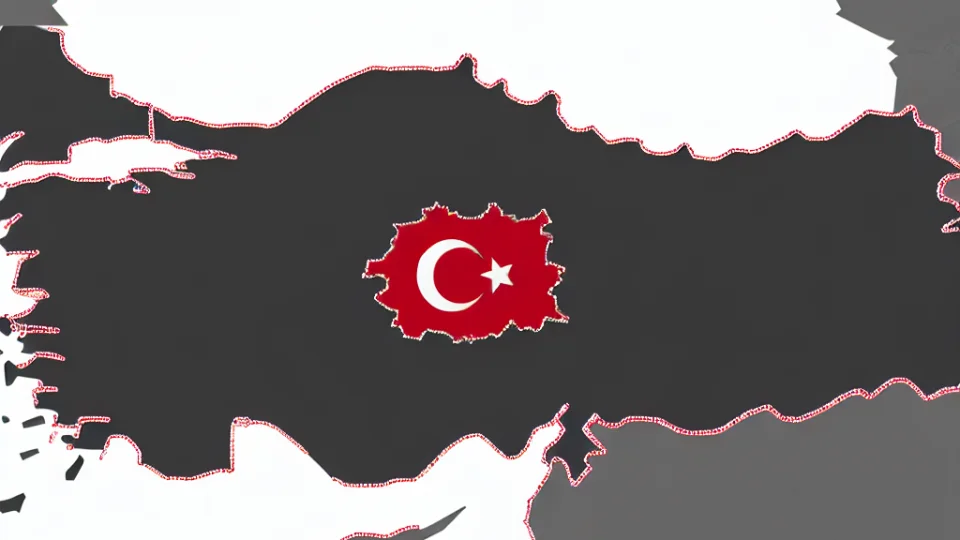
Turkey is an important country due to its geographical location and historical background, sharing borders with a total of eight countries. These countries include Greece, Bulgaria, Georgia, Azerbaijan (Nakhchivan), Iran, Iraq, Syria, and Armenia. Turkey's neighbors hold significant strategic importance. For example, serving as a bridge between the West and the East plays a crucial role in Turkey's international relations. Additionally, the border relations with these countries offer great wealth in terms of economy, culture, and social interaction.
Greece is a neighbor located to the west of Turkey and is surrounded by the Aegean Sea. The relationship between these two countries has a historically complex structure. Although there are occasional political tensions, there are significant collaborations, especially in tourism and trade. Bulgaria is another neighbor located to the north of Turkey. The border with this country strengthens Turkey's connection to Europe. Border trade with Bulgaria provides economic benefits for both countries.
Georgia is located to the east of Turkey, and the border with this country has a mountainous structure. Therefore, transportation and trade challenges can occur between the two countries. However, relations between Georgia and Turkey have developed in recent years. Particularly, energy projects and trade agreements have strengthened the cooperation between the two countries. Nakhchivan, an autonomous region belonging to Azerbaijan, has a short but strategically important border with Turkey. The energy lines passing through this region contribute to Turkey's energy security.
Iran is another significant neighbor located to the east of Turkey. The border between these two countries is nourished by historical and cultural ties. Although relations between Iran and Turkey sometimes involve political discussions, there are important collaborations in trade and energy. Iraq and Syria, located to the south of Turkey, hold great importance, especially in terms of border security. Relations with these two countries are constantly changing due to the political dynamics in the region. Turkey is working to strengthen its relations with these neighbors to ensure stability in the region.
Which Countries Share a Border with Turkey?

Turkey is strategically located at a point that connects the Asian and European continents. This situation makes Turkey an important center in terms of both cultural and commercial relations with the surrounding countries. Turkey shares borders with a total of 8 countries. These countries shape Turkey's neighborhood relations through their geographical, historical, and cultural ties.
To the east of Turkey, it shares borders with Armenia, Azerbaijan (Nakhchivan), and Iran. The border relations with these countries hold significant importance both politically and economically. Especially, the border with Iran is considered as Turkey's gateway to eastern markets. Additionally, the ethnic and cultural diversity in these regions deepens Turkey's relations with these countries.
Furthermore, to the west of Turkey, there are border connections with Greece and Bulgarian. The border with these countries is significant as it serves as a gateway for Turkey to the European markets. The border relations with Greece have a historical background and contribute to strengthening not only cultural interactions but also commercial ties.
Lastly, to the south of Turkey, there are borders with Syria and Iraq. Relations with these two countries are quite sensitive due to the political instability and security issues in the region. The border proximity also influences Turkey's foreign policies and causes the relations with these countries to be in a constant state of flux.
What Are the Relations Between Turkey and Its Neighboring Countries?
Turkey's relations with its neighboring countries are shaped not only by historical and cultural ties but also by economic and strategic factors. Due to its geographical location, Turkey serves as a bridge between both Europe and Asia. In this context, relations with neighboring countries are of great importance not only in terms of border security but also in terms of trade, energy, and cultural interaction. For example, relations between Turkey and Greece have developed over time through cooperation and dialogue channels, despite historical tensions.
Relations with Azerbaijan are based on the friendship and cooperation that comes from being brother countries. Turkey was one of the first countries to recognize Azerbaijan's independence, and there are significant partnerships between the two countries, such as energy projects. Particularly, projects like TANAP and TAP enhance Turkey's energy security while facilitating Azerbaijan's energy exports to Europe. These relations are not limited to the economic dimension but also encompass cultural and political collaborations.
Relations with Syria have become quite complex during the civil war. Turkey has engaged in numerous international initiatives to address the humanitarian crisis in Syria and has had to manage the influx of refugees at its border. Turkey's policies towards Syria are continuously evolving in terms of both national security concerns and humanitarian aid. In this context, military operations conducted in northern Syria play a significant role in shaping Turkey's security strategy.
Finally, relations with Iraq also hold significant importance. Turkey has developed economic and commercial relations with the Kurdish region in northern Iraq. Additionally, there is cooperation on border security and counter-terrorism issues. Although political instability in Iraq sometimes complicates Turkey's relations with this country, both nations are making various agreements to contribute to each other's economic development. This situation is critical for peace and stability in the region.
Which Countries Are Geographically Closest to Turkey?
Turkey is a country located at the crossroads of Asia and Europe. This position makes Turkey a neighbor to many countries. To the east of Turkey are Armenia, Azerbaijan (Nakhchivan), and Iran; to the west are Greece and Bulgarian. Surrounded by the Black Sea to the north and the Mediterranean to the south, Turkey has established close relations with countries that have coastlines along these seas. Particularly, the Eastern Anatolia Region draws attention due to its proximity to Turkey's farthest eastern neighbors.
Turkey's geographical location is also significant in terms of historical and cultural interactions. For example, Iran, located to the east of Turkey, has been home to many civilizations throughout history. Therefore, the relations between Turkey and Iran are not only political but also have a cultural depth. The two countries cooperate in many areas such as trade and tourism. This neighborhood enhances mutual interaction and creates a bridge between the peoples of the two countries.
Additionally, Greece, located to the west of Turkey, is another neighbor with historical and cultural ties. Despite the historical disputes between Turkey and Greece, there are significant relations in areas such as tourism, trade, and cultural exchange. Particularly, the Aegean Sea stands out as a strategically important region for both countries. Therefore, the islands and coastal areas around the Aegean Sea are frequently visited places between the two countries.
Lastly, Georgia, located to the north of Turkey, is noteworthy in terms of its border proximity to Turkey. Due to its position at the intersection of both Asia and Europe, Georgia has the potential to develop multifaceted cooperation with Turkey. Projects in trade, transportation, and energy between the two countries are further strengthened thanks to Turkey's geographical location. Thus, Turkey's relations with its neighbors are not limited to mere border proximity but deepen in many areas.
What is the Trade Volume with Turkey's Neighboring Countries?
Turkey holds strategic importance due to its geographical location, which directly affects its trade relations with neighboring countries. The trade volume with countries neighboring Turkey carries significant meaning for both economic growth and regional stability. Particularly, Turkey's role as a gateway to European, Asian, and Middle Eastern markets makes trade relations with neighboring countries even more crucial. These trade relations also reveal remarkable figures in terms of import and export balance.
The trade volume with Turkey's neighbors, such as Greece, Bulgaria, Georgia, Azerbaijan, Iran, Iraq, and Syria, has shown a continuous increase over the years. For instance, trade between Turkey and Iran has strengthened the economic relations between the two countries. While Turkey imports oil and natural gas from Iran, it also has a presence in the Iranian market with export items such as construction materials and food products. This situation is of great importance for the economic independence of both countries.
- Turkey's trade volume with Greece reached 6.5 billion dollars in 2022.
- The trade volume with Bulgaria has reached approximately 4.2 billion dollars.
- The trade volume with Georgia has exceeded 1.5 billion dollars.
- The trade volume with Iraq has approached 10 billion dollars.
Another important neighboring country in terms of trade volume is Iraq, which is one of Turkey's largest markets. With its exports to Iraq, Turkey is also a significant player in the energy, food, and construction sectors. Although trade relations with Syria have fluctuated due to the effects of the civil war, it has historically been one of Turkey's most important trade partners. In this context, it is important to focus on how Turkey's trade volume with neighboring countries is shaped by political and economic factors.
Which Immigrants Are Coming from Turkey's Neighbors?
Turkey has become an attractive country for many immigrants due to its geographical location. Particularly, Syria, located on Turkey's southeastern border, has witnessed a significant migration movement in recent years. Due to the civil war in Syria, hundreds of thousands of people have migrated to Turkey in search of a safe life. These immigrants have started to live in various cities across Turkey and have become part of the society. Most of the immigrants from Syria have concentrated in Turkey's major cities, especially in Istanbul and Gaziantep.
In addition, immigrants from Afghanistan are also making a significant contribution to Turkey. In recent years, due to political and economic uncertainties in Afghanistan, many individuals have chosen Turkey as a temporary or permanent refuge. Some of these immigrants are seeking job opportunities in various provinces of Turkey, while others are using Turkey as a transit country to move on to Europe. The integration of Afghan immigrants into the social structure in Turkey is an important issue in terms of both cultural richness and social cohesion.
Iraq, as another neighbor of Turkey, is also a country that has been subjected to an influx of immigrants. Particularly, the conflicts and security issues in northern Iraq have led many Iraqis to migrate to Turkey. The Turkish government is providing various supports to these immigrants from Iraq and is trying to improve their living conditions in Turkey. Iraqi immigrants play an important role in the labor market in Turkey and contribute to the local economy.
Lastly, immigrants coming from Greece, located in the west of Turkey, also form a significant group of immigrants. Especially during periods of economic crisis, the number of immigrants crossing from Greece to Turkey has increased. These immigrants generally come to Turkey in hopes of finding work. Additionally, various opportunities and social aids provided by the Turkish government help Greek immigrants establish a better life in Turkey. Turkey is implementing various projects to facilitate the integration of these immigrants, contributing to social cohesion.
What Are the Cultural Interactions Between Turkey and Its Neighboring Countries?
Turkey, due to its geographical location, is in interaction with many neighboring countries. This interaction has allowed various civilizations to come together throughout history and facilitated cultural exchange. For example, Syria, located in the southeast of Turkey, has been a crossroads of many different cultures throughout history. This situation is reflected in the sharing of language, food, and traditions between the two countries. Additionally, the historical and cultural ties with Armenia to the east of Turkey are also evident in the art and literature of both countries.
The cultural interactions between Greece and Turkey are quite profound. Both countries share many common elements in their historical backgrounds, mythology, and art. For instance, some dishes in Turkish cuisine have been influenced by Greek cuisine. Furthermore, the proximity between the Greek islands and the western coast of Turkey has created similarities in the music and dance traditions of both sides. This situation contributes to the social structure of both countries as a cultural richness.
Azerbaijan is one of Turkey's eastern neighbors, and there is a strong cultural bond between the two countries. There are significant similarities between Turkish and Azerbaijani cultures in terms of language, music, and traditions. In particular, the traditional music and dances of both societies have been shaped by their shared history. The participation of Turkish artists in festivals held in Azerbaijan is a sign of this cultural interaction. Additionally, mutual influences can be observed in the literature of both countries.
Lastly, it is important not to forget the cultural interactions between Iraq and Turkey. Especially, the Kurdish population living in southeastern Turkey shares many similarities with the Kurds in Iraq in terms of language and culture. This situation is reflected in the traditional clothing, music, and festivals of both sides. Moreover, Turkey's cultural aid to Iraq strengthens the ties between the two countries and increases social interactions.